
Worksheets for Week May 11th - May 15th 2020

Working plan May 11th to May 15th
Our new topic will be Unit 14: “Where we live”.

Working plan May 11 to May 15
Our new topic will be Unit 14: “Where we live”
|
Day |
Topic |
What to do |
Where to find/Materials |
check ✅ |
|
May 11 |
Vocabulary |
Write all the vocabularies into your vocabulary book |
Workbook p. 106/107 Word file, different homes, possessive pronouns, words and phrases |
|
|
|
Houses and Homes |
Read the text and answer the questions |
Student book p. 99, 1+2 |
|
|
|
Inside a room |
Look at the picture and number the words |
Student book p, 100/3 |
|
|
where-do-you-live-mind map |
Complete the mind map |
Worksheet 1 |
|
|
|
|
Dream houses |
For each photo write down five adjectives to describe (a) what the place is like, or (b) what you think it would be like to live there. |
Worksheet 2 |
|
|
|
|
After a few minutes agree in groups which of the locations would be the one you most like to live in and why |
|
|
|
May 13 |
Furniture in my house |
Fill in the correct words |
Worksheet 3 |
|
|
|
|
Where can you see those furniture |
|
|
|
May 14 |
where-do-you-live--reading-comprehension |
Read the text and then answer the questions |
Worksheet 4 |
|
|
|
Rooms in a house |
Read the text about Melissa’s house, answer the questions Write a text about your house/apartment/room |
Worksheet 5 |
|
|
May 15 |
Exercise in workbook |
Finish all the exercises |
Workbook p. 99-105 |
|
Worksheets for Week May 4th - May 8th 2020
Week May 4th – May 8th 2020
Dear Student,
This week is dedicated to your mothers. You will get nine activities to do. Work carefully and finish everything by May 8th.
You will get an email every morning telling you what to do.
Have fun,
Mrs. Richter
|
Activity |
Worksheet |
What to do |
Check ✅ |
|
1 |
Mother’s Day vocabulary list |
Write all the new words from this unit into your word list. |
|
|
2 |
My fantastic mother |
Read the text and fill in the exercises |
|
|
3 |
Letter to your mother |
Write a very special friendly letter to your mom |
|
|
4 |
Mother’s Day crossword puzzle |
Do the crossword puzzle |
|
|
5 |
Mother’s Day Origins |
Read the text and answer the questions |
|
|
6 |
Mother’s Day Traditions in Great Britain |
Fill in the blanks |
|
|
7 |
Mother’s Day card |
Make a Mother’s Day card |
|
|
8 |
Mother’s Day picture description |
Fill in |
|
|
9 |
Mother’s Day Poem |
Choose one of the poems, write it on a nice sheet of paper and learn it by heart. Then video tape it and send it to your teacher. |
|
Worksheets for April
Bonus task:
Working plan for April
Families Unit 12
This time you will need your student’s book, your workbook, your mobile phone, tablet, laptop,…
Together we are going to work on a new Unit – Families
That’s in your Student’s Book Unit 12, page 85-89, Workbook page 84 – 91.
So, what are you going to do:
-
Write the vocabulary of this unit into your vocabulary book (wb. P. 91)
-
Be ready for our online video conferences. You will be given a detailed schedule of when we will meet online. Please take part in the video conferences it is important for you.
-
Be active when in the video conference
-
Do all the exercises. I am going to send you daily exercises via email. If you want to have the exercises as paper worksheets, I am providing all the worksheets in paper. You can pick them up in school.
You can either print the worksheets or fill them in on your computer. Watch the video below, if you don't know how to do this!
|
Where to find/ Topic: |
What to do: |
Check: |
|
Student’s book: Listening Unit 12, p.85/1 |
👂 Listen to the exercise and fill in the words |
✅ |
|
Reading p. 85/3 |
Read the text about Angelia Jolie and do exercises 4 |
✅ |
|
Reading p.86/5+6 |
Read the text and fill in ex. 6 |
✅ |
|
p. 87/ 9+10 |
How many tasks can you master? |
✅ |
|
p.86/7 |
👂 listening |
✅ |
|
Fill in the correct words |
✅ |
|
|
🌲 Make a family tree of your own family. Then write about your family. spouse=Ehepartner, DOB=date of birth |
✅ |
|
|
|
Read the text and do all the exercises
Read the text and do the tasks |
✅
✅ |
|
Do the family quiz |
|
|
|
Read the text about the Simpson Family then fill in the family tree and do all the exercises |
|
|
|
Workbook p. 84-91 |
Finish all the exercises until April 30 |
|
|
|
Write the vocabulary of this unit into your vocabulary book (wb. P. 91) |
|
|
Talking |
Tape your text about your family and send it to your teacher. |
|
|
Write sentences about what you like/don’t like doing |
✅ |
|
|
Fill in and do all the exercises |
✅ |
|
|
Read the worksheet and think about questions you want to ask in the video conference |
✅ |
|
|
Read the definitions and do the exercises |
|
|
|
Fill in |
|
|
|
Reading- The first pineapple |
3 Worksheets |
|
|
|
Write a short summary of and response to the story |
|
|
|
|
|
Reading: The First Pineapple
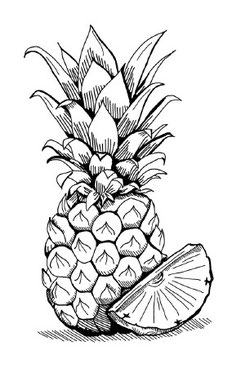
In a small island village, a little girl named Pina lived with her mother. Pina was a very sweet girl, but never wanted to help. She sang all the time but wouldn’t help with the household chores. Her mother tried to change Pina, but nothing seemed to work.
Pina’s mother was a dressmaker. One rainy night, her mother was working late to finish an important dress. While sewing, the needle slipped from her fingers and fell to the floor. “Pina, help me find the needle,” begged
her mother. “My eyes are too old to see in this dim light.”
Pina slowly walked over and knelt on the floor. “I can’t find it, mother,” she said, flatly.
“It’s down there somewhere,” her mother urged. “Look carefully under my chair and the table.”
Pina didn’t feel like looking for it. She stared at the wall instead. “I still can’t find the needle,” she whined.
Her mother could tell that Pina didn’t want to help. “Pina! What’s the matter with you? Why can’t you help me? I wish the fairies would give you lots of eyes so that you will look around for the needle.”
Suddenly, there was a loud thunderclap outside. Pina’s mother looked down but did not see her daughter. “Pina, where did you go?” she asked. She got up and looked around the house, but did not find Pina anywhere. “What a lazy girl,” she muttered. “She tries so hard just to avoid helping me.”
Pina’s mother then noticed a big lumpy object on the floor. Its yellow and green colors were the same as the dress Pina had been wearing. Many dark spots that looked like eyes covered it. She then remembered what she said to Pina about having many eyes.
The object smelled sweet, just like Pina. Her mother found it irresistible. She cut it open with a knife and tasted the sweet insides. It was the most wonderful taste in the world.
Her mother planted the top of the fruit in the ground behind her house. It grew large and multiplied across the island. Everyone enjoyed the wonderful taste of its fruit. They named it Pinya, after the dressmaker’s daughter. And that is how the pineapple came to be.
Thu, 16th April
Unit 12
Homework:
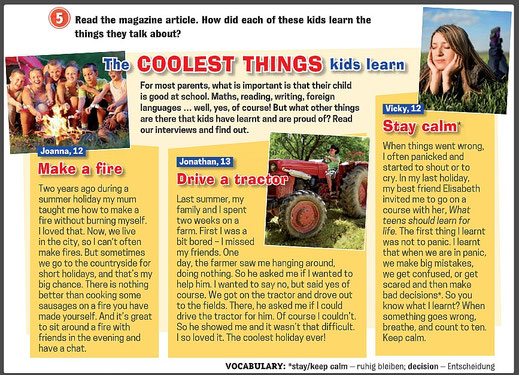
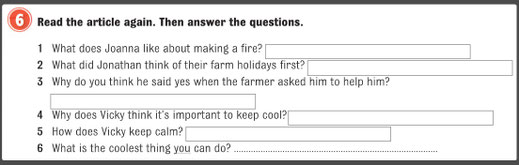
- Read the texts of exercise 5 and answer the questions below (ex. 6) in your exercise book (in full sentences).
- Do the vocabulary online task.
Listening Task
Task A: Listening - A fruit smoothie
Listen to the conversation. Then read the questions and choose the right answer.
Task B: Vocabulary
Write the words in the right boxes.
The Empty Pot
Translate into German (use a dictionary or Google):
- successor to the throne
- proclamation
- competition
- courage
- honesty
- cunning/cleverness
- determination
- wisdom
- care
- integrity
- soil
- flower pot
Listen to the story and then answer the questions. Next write a short summary. Write 5-10 sentences about what you think about the story
- Where does the story take place?
- What does the author tell us about Ping?
- How can we tell that the Emperor loves flowers?
- What three things does the Emperor say in his proclamation?
- The Emperor states, "Whoever can show me their best in a year’s time will succeed me to the throne." What does the Emperor mean?
- How do the children feel about the Emperor’s proclamation?
- How does Ping feel when he receives his seed from the Emperor?
- Why is Ping so happy?
- Does Ping have a good reason for thinking he could grow the most beautiful flower?
- What does Ping do with the seed?
- How does Ping feel? Why is he so worried?
- What does Ping do when the seed does not grow?
- Is Ping trying his best to make his seed grow? What evidence shows whether Ping is or is not trying his best in the contest?
- What are the other children doing with their flowers? Why are they rushing?
- How is Ping feeling while the other children are rushing to the palace?
- Why is Ping feeling ashamed while the other children are rushing to the palace?
- What does Ping’s father say to him?
- What does the Emperor do when he sees what the other children have brought?
- What does the Emperor do when Ping tells him why he brought an empty pot?
- What happens when Ping presents his empty pot to the Emperor?
- Why does the emperor choose Ping as his successor?
The Empty Pot – by Demi
A long time ago in China there was a boy named Ping who loved flowers. Anything he planted burst into bloom. Up came flowers, bushes, and even big fruit trees, as if by magic!
Everyone in the kingdom loved flowers too. They planted them everywhere, and the air smelled like perfume.
The Emperor loved birds and animals, but flowers most of all, and he tended his own garden every day. But the Emperor was very old. He needed to choose a successor to the throne. Who would his successor be? And how would the Emperor choose? Because the Emperor loved flowers so much, he decided to let the flowers choose.
The next day a proclamation was issued: All the children in the land were to come to the palace. There they would be given special flower seeds by the Emperor. “Whoever can show me their best in a year’s time,” he said, “will succeed me to the throne.”
This news created great excitement throughout the land! Children from all over the country swarmed to the palace to get their flower seeds. All the parents wanted their children to be chosen Emperor, and all the children hoped they would be chosen too!
When Ping received his seed from the Emperor, he was the happiest child of all. He was sure he could grow the most beautiful flower. Ping filled a flowerpot with rich soil. He planted the seed in it very carefully. He watered it every day. He couldn’t wait to see it sprout, grow, and blossom into a beautiful flower!
Day after day passed, but nothing grew in his pot. Ping was very worried. He put new soil into a bigger pot. Then he transferred the seed into the rich black soil. Another two months he waited. Still nothing happened. By and by the whole year passed.
Spring came, and all the children put on their best clothes to greet the Emperor. They rushed to the palace with their beautiful flowers, eagerly hoping to be chosen. Ping was ashamed of his empty pot. He thought the other children would laugh at him because for once he couldn’t get a flower to grow. His clever friend ran by, holding a great big plant. “Ping!” he said. “You’re not really going to the Emperor with an empty pot, are you? Why couldn’t you grow a great big flower like mine?” “I’ve grown lots of flowers better than yours,” Ping said. “It’s just this seed that won’t grow.”
Ping’s father overheard this and said, “You did your best, and your best is good enough to present to the Emperor.” Holding the empty pot in his hands, Ping went straight away to the palace.
The Emperor was looking at the flowers slowly, one by one. How beautiful all the flowers were! But the Emperor was frowning and did not say a word.
Finally he came to Ping. Ping hung his head in shame, expecting to be punished. The Emperor asked him, “Why did you bring an empty pot?” Ping started to cry and replied, “I planted the seed you gave me and I watered it every day, but it didn’t sprout. I put it in a better pot with better soil, but it didn’t sprout. I tended it all year long, but nothing grew. So today I had to bring an empty pot without a flower. It was the best I could do.”
When the Emperor heard these words, a smile slowly spread over his face, and he put his arm around Ping. Then he exclaimed to one and all, “I have found him! I have found the one person worthy of being Emperor! “Where you got your seeds from, I do not know. For the seeds I gave you had all been cooked, so it was impossible for any of them to grow. “I admire Ping’s great courage to appear before me with the empty truth, and now I reward him with my entire kingdom and make him Emperor of all the land!”
A little grammar
Some verwenden wir für "etwas", "einige" oder "ein bisschen". Im Deutschen wird dafür oft auch gar kein Wort verwendet.
Any bedeutet "kein(e)". Es wird für Verneinungen und Fragen verwendet.
There are some apples on the table. - Auf dem Tisch sind einige/ein paar Äpfel.
There is some bread on the table. - Auf dem Tisch ist (etwas) Brot.
I'd like some ice cream. - Ich hätte gerne Eis.
There aren't any apples on the table. - Auf dem Tisch sind keine Äpfel.
Are there any apples on the table? - Sind auf dem Tisch Äpfel?
No, I haven't got any money. - Nein, ich habe kein Geld.
Bei höflichen Fragen, auf die man ein "Ja" als Antwort erwartet, wird auch some verwendet.
Would you like some tea? - Hättest du gerne Tee? -> Ich biete Tee an und erwarte ein "Ja".
Can I have some chocolate, please? - Kann ich bitte Schokolade haben? -> Ich bitte um Schokolade und erwarte ein "Ja".
At the restaurant
- Vocabulary Food & Restaurant
- Ordering at a restaurant (reading)
- A dialogue at a restaurant (writing)
Reading
Read the dialogue. How many of the tasks below can you do?
Ordering food
Waiter: Are you ready to order, madam?
Mrs Green: Yes, I am. I’d like the chicken with peppers, please.
Waiter: The chicken and peppers. And would you like any potatoes with that?
Mrs Green: Can I have chips, please?
Waiter: Certainly. And are you ready to order desserts?
Mrs Green: Yes, I am. I think I’d like the chocolate ice cream with strawberries, please.
Waiter: Good choice. The strawberries are really delicious. And you, sir? Can I take your order?
Mr Green: I’d like the beef, please.
Waiter: I’m really sorry, but we haven’t got any beef left. The lamb is very good.
Mr Green: What does it come with?
Waiter: It comes with cabbage and peppers in a tomato sauce.
Mr Green: OK. That sounds good. I’d like the lamb, please.
Waiter: Certainly. And how about dessert, sir? The apple pie is delicious. It comes with ice cream.
Mr Green: Actually, I don’t want a dessert, thank you.
Waiter: No problem, sir. The food will be with you soon.
Complete the sentences with words from the box. There are two extra options.
|
chips not ready potatoes peppers ready |
|
1 |
The waiter asks if Mrs Green wants some .............................. . |
|
|
|
|
2 |
Mrs Green orders .............................. with her chicken and peppers. |
|
|
|
|
3 |
Mrs Green is .............................. to order desserts. |
Circle the correct answer.
|
4 |
Mrs Green chooses chocolate / strawberry ice cream. |
|
|
|
|
5 |
The waiter thinks Mrs Green will love / hate the strawberries. |
|
|
|
|
6 |
Mr Green can have beef / lamb. |
Answer the questions.
|
7 |
What can Mr Green have with his main course? ............................................................................................................................................................... |
|
|
|
|
8 |
What does the waiter suggest for dessert? ............................................................................................................................................................... |
|
|
|
|
9 |
What would Mr Green like for dessert? ............................................................................................................................................................... |
Vocabulary
Start a wordlist and translate the following phrases:
|
Good morning / afternoon. |
|
|
I have a reservation for 8 o'clock. |
|
|
Can I have your name? |
|
|
Your table is ready, right this way. |
|
|
Your table is not ready, would you like to wait in the bar? |
|
|
Would you like to have a starter? |
|
|
Our salads are excellent, madam. |
|
|
Would you like to hear today's specials? |
|
|
Are you ready to order? |
|
|
Anything to drink? |
|
|
Anything for dessert? |
|
|
I'd like a ..........., please. |
|
|
What's the today's speciality? |
|
|
The fish is really fresh today. |
|
|
Try our lobster risotto / seafood pasta / grilled vegetables… |
|
|
If you try our roast pork/beef/chicken.., you won't be sorry. |
|
|
Was everything all right? |
|
|
Were you satisfied? |
|
|
Could you bring me some bread? |
|
|
Yes, I'd like a chocolate cake / ice cream / vanillla pudding… |
|
|
No, thanks, just a glass of water, please. |
|
|
Please bring me the bill. / Can I have the bill, please? |
|
|
Here's the bill. |
|
|
Keep the change. |
|
|
Everything was delicious, thank you. |
|
|
Can I offer you dessert? |
|
|
Waiter, I’d like the menu, please.
|
|
|
Here you are. |
|
|
I’ll start with…. |
|
|
What would you recommend? |
|
|
Would you like…. |
|
|
Rare/medium/well – done
|
|
|
Is service included? |
|
|
How would you like to pay: cash or by credit card?
|
|
Writing
You are at a restaurant with your family. You are ordering your meal. Write a short dialogue with the waiter/waitress. Write 50–80 words.
Grammar - Past tense
-
Write the missing forms:
|
INFINITIVE |
PAST |
INFINITIVE |
PAST |
|
|
FELL |
SPEAK |
|
|
DRAW |
|
|
KNITTED |
|
|
SAW |
KEEP |
|
|
COME |
|
GIVE |
|
|
|
BEGAN |
|
NEEDED |
|
BE |
|
SEND |
|
|
|
STUDIED |
|
SWAM |
|
WRITE |
|
SLEEP |
|
|
LIVE |
|
|
THOUGHT |
|
|
WENT |
WAKE |
|
|
BRING |
|
CATCH |
|
|
|
FLEW |
|
MADE |
|
RIDE |
|
STAY |
|
|
|
COULD |
|
PAID |
|
|
SOLD |
DO |
|
|
GET |
|
|
RAN |
-
Complete the sentences with the correct past form. Use the verbs from exercise 1.
1. Adam __________ a new iPad last week. (+)
2. “ _________ you __________ Tim at school (?)” “Yes, I ________. He ________ with Sue” (+)
3. Carol __________ the exercises yesterday (-)
4. My father ___________ moving to London was a mistake! (+)
5. “_________ Pam ________ her flat last month?” No, she ________.”
6. Grandma __________ a nice sweater to me for my birthday (+)
7. The film ___________ at 7:30, but at 7:40 (-)
8. We ___________ in the pool on Friday (+)
9. Where __________ you ________ in London, in a hotel or with friends?
10. He ___________ a fantastic book last year (+). I ___________ it as soon as it was published (+)
11. Unfortunately we ___________ the bus (-), so we ___________ back home very late (+).
-
Choose the right option:
1. Alan didn’t see/ didn’t watch Paula t school.
2. Did you be/ Were you at the cinema yesterday?
3. Carol brought/ bought her new laptop to school.
4. The baby cried/cryed all night long.
5. My brother could swim/could swam when he was four.
6. Charles repaired/prepared a nice dinner.
7. The children ate/eatted a cheese sandwich.
8. Did you sit/ Did you sat next to Mary?
9. There was/were a lot of people at the match.
11. Peter forgot/forgotted my birthday.
12. The children plaied/ played football after school.
13. Did you studied/ Did you study a lot for the exam?
14. Who helped/ did helped you with the homework?
-
Fill in Dave’s routine by putting the most suitable past verb (affirmative or negative). Different options are possible.
get2 x - wake - make - have 2x - eat 2x - brush - kiss - meet - wait - not come - walk - be 5x not like 2x - go - take – come – not phone
Yesterday, Dave ……………… up at 7:15, but he ……………… up until 7:25. His mother …………… breakfast for him. Dave …………… some orange juice and …………… some eggs & bacon. After breakfast, he ………………… dressed, ……………… his teeth and …………… his hair. He ……………… mum before leaving home.
Dave …………… his friends at the bus stop. They ………… for 10 minutes, but it ……………, so they ……………… to school, but unfortunately, they …………… late, so the teacher ………………… angry.
Dave and his friends …………… lunch at the canteen. Yesterday’s menu ………… horrible. They …………… it. There ……………… vegetables and fish. Everybody ……………… it …………… a healthy menu, but they ……………… it.
After school Dave ……………… back home on foot. It …………… him 40 minutes. When he …………… home, his mother ………… worried because Dave ……………… her to say he would be late. What a day!
Past simple
Regular / Irregular Verbs
A- Complete with the right form of the verb and use the word ago. Follow the example.
Example I saw (see) her two weeks ago.
1. He __________ (catch) a bus an hour __________.
2. I __________(drink) a cup of tea ten minutes __________.
3. He __________(speak) to the director two days __________.
4. She __________(meet) them a month __________.
5. They __________(have) lunch two hours __________.
6. John __________(open) the window half an hour __________.
7. My sister__________(cook) dinner an hour __________.
8. Mr. Field __________(telephone) just a minute __________.
9. they __________(be) in Paris a year __________.
10. I __________(eat) a sandwich an hour __________.
B- Fill in the blank spaces with the past simple of the verbs in brackets.
1. She __________(ask) me questions.
2. __________ (she / arrive) in time?
3. They __________ (not/ eat) any chocolate.
4. __________(you/see) anybody there?
5. he __________(know)something about it.
6. We __________(meet) her last week.
7. Why __________ (they / to be) so angry?
8. __________ (she / clean) the blackboard?
9. Two years ago we __________(visit) Italy.
10. They __________ (not / look) after the little girl.
11. The doctor __________ (not / tell) her to stay in bed.
12. Who __________ (you / give) it to?
13. __________ (there to be) many people in front of the place?
14. It __________ (not / rain) yesterday.
15. __________ (he / not/ find9 the key?
16. __________ (Tom / to be) at work?
17. Why __________ (they / not / tell) me the truth about it?
18. He __________ (never / drive) faster than he should.
19. We __________ (not/ walk) a long way.
20. __________(you/have) a comfortable trip?
21. When __________She / wash her car?
22. __________ (you / visit) your grandparents last week?
23. __________ (the teacher / not / talk) to Peter after the lesson?
24. __________ (she / not / buy) a blue jacket?
25. What color __________(they/paint) their room?
26. He __________(find) the key on his way home?
27. __________ (she / know) all the students’ names?
28. They __________ (not / return) at 9.
29. They __________(not/leave) the books at home. They __________(leave) them at school.
30. He __________ (not / wear) the old jeans. He __________(wear) the new ones.